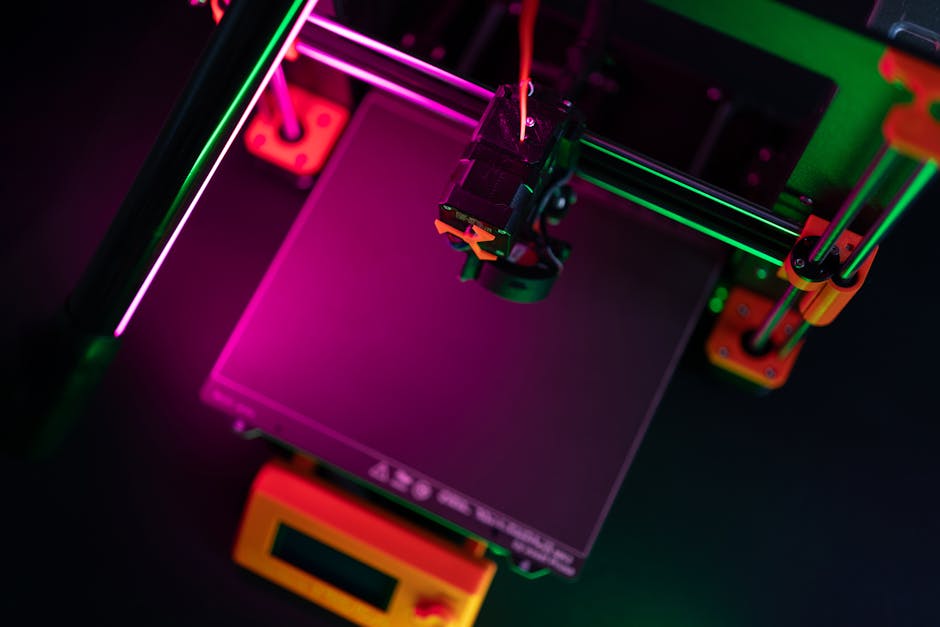
Best Petg Filament for Functional Parts
If you’re delving into the world of 3D printing beyond simple prototypes and aesthetic prints, you’ve likely encountered a need for stronger, more durable materials. While PLA is fantastic for beginners and general models, and ABS offers great heat resistance, PETG (Polyethylene Terephthalate Glycol) often emerges as the unsung hero for functional parts. Striking a near-perfect balance between strength, flexibility, and ease of printing, PETG is quickly becoming a favorite among hobbyists and professionals alike for creating components that need to stand up to real-world use. But with so many brands on the market, how do you find the best PETG filament for your functional projects? Check out our best 3D printers guide.
Why PETG is Your Go-To for Functional Parts
PETG sits comfortably between PLA and ABS in terms of properties, offering a compelling blend of advantages that make it ideal for parts that need to perform under stress.
Strength and Durability
Compared to PLA, PETG boasts significantly higher tensile strength and impact resistance. This means your printed parts are less likely to break or shatter when dropped or subjected to force, making it perfect for tools, jigs, structural components, and parts exposed to mechanical stress.
Temperature Resistance
While not as extreme as ABS or ASA, PETG offers a decent heat deflection temperature, typically ranging from 70-80°C. This makes it suitable for parts that might be used near heat sources or in environments where PLA would soften and deform, such as automotive interior components or electronics enclosures.
Chemical Resistance
PETG exhibits good resistance to many common chemicals, including water, acids, and alkalis. This property is crucial for parts that might come into contact with various substances, from kitchen gadgets to outdoor enclosures.
Flexibility and Layer Adhesion
Unlike PLA, which can be quite brittle, PETG has a degree of flexibility, allowing it to bend slightly before breaking. This makes it more forgiving for parts that need to absorb some shock or flex. also, PETG is known for its excellent layer adhesion, meaning the layers of your print bond together very strongly, contributing to the overall strength and integrity of the final part.
Ease of Printing (Compared to ABS)
While not as easy as PLA, PETG is generally much more forgiving to print with than ABS. It doesn’t typically require an enclosure to prevent warping, has less odor, and adheres well to various print surfaces. This makes it an accessible material for those looking to upgrade from PLA without the common headaches associated with ABS.
Key Considerations When Choosing PETG Filament
Not all PETG filaments are created equal. To ensure you’re getting the best performance for your functional parts, keep these factors in mind:
Brand Reputation & Consistency
A reputable brand often means consistent quality. This translates to reliable diameter, uniform color, and predictable printing behavior. Inconsistent filament can lead to clogs, poor layer adhesion, and failed prints, especially when you’re trying to create robust parts. Look for brands with strong community reviews and a track record of quality control.
Tolerance & Diameter Accuracy
Filament diameter tolerance is critical. A filament advertised as 1.75mm with a tolerance of ±0.02mm is far better than one with ±0.05mm. Tighter tolerances ensure consistent extrusion, which directly impacts the accuracy and strength of your printed part. Variations can cause under-extrusion, over-extrusion, and ultimately compromise the structural integrity.
Color & Opacity
While less critical for purely functional parts, color and opacity still matter. Some clear PETG filaments might be more prone to stringing, and certain pigments can affect print settings slightly. For maximum strength, often opaque colors are preferred due to fewer additives affecting the base material properties.
Price vs. Performance
Good PETG doesn’t always mean the most expensive. There’s a sweet spot where quality meets affordability. Investing a little more in a reliable brand can save you money and frustration in failed prints and wasted material in the long run. Consider your project’s requirements: a critical structural part might warrant a premium filament, while a simple bracket could use a more budget-friendly option.
Our Top PETG Filament Recommendations for Functional Parts
Based on extensive testing and community feedback, here are some of the best PETG filament options that consistently deliver excellent results for functional 3D prints:
Prusament PETG
Often considered the gold standard, Prusament PETG by Prusa Research is renowned for its incredibly tight tolerances and exceptional print quality. It prints smoothly with excellent layer adhesion, minimal stringing (once dialed in), and yields very strong parts. While it might be on the pricier side, the consistency and reliability make it worth the investment for critical functional components. If you own one of our top recommended 3D printer picks from Prusa, this is a natural fit.
Hatchbox PETG
Hatchbox has built a strong reputation for producing high-quality, reliable filaments at a competitive price. Their PETG filament is no exception. It’s known for consistent diameter, good color uniformity, and excellent layer adhesion, resulting in strong and durable prints. It’s often recommended as a great all-rounder for both beginners and experienced users looking for reliable performance without breaking the bank. While we are discussing PETG, their PLA is also a proof to their overall quality.
Overture PETG
Overture has quickly become a popular choice for its balance of quality and affordability. Their PETG options offer good dimensional accuracy and are generally easy to print with, producing strong and functional parts. It’s a fantastic option for those looking to get into PETG without a significant initial investment, offering performance that rivals more expensive brands. Much like their popular PLA filament, Overture PETG delivers consistent results.
eSun PETG
eSun is another solid contender in the PETG market, offering a wide range of colors and good overall performance. Their PETG is known for its strength and good layer adhesion. It’s often praised for being relatively easy to print, making it a good choice for those transitioning from PLA. eSun provides a cost-effective solution for producing functional parts without sacrificing too much on quality.
Tips for Printing with PETG for Best Functional Results
Even with the best PETG filament, proper print settings are crucial for maximizing the strength and quality of your functional parts:
Temperature Settings
- Nozzle Temperature: PETG typically prints hotter than PLA, usually between 230-250°C. Start in the middle and adjust based on stringing or layer adhesion issues.
- Bed Temperature: A heated bed is almost always necessary, usually 70-85°C. This helps with bed adhesion and reduces warping.
Bed Adhesion
PETG can stick *too* well to some surfaces like bare glass, potentially pulling chunks off. We recommend a PEI sheet, blue painter’s tape, or a thin layer of glue stick on a glass bed for easy removal and excellent adhesion.
Retraction Settings
PETG is notorious for stringing. Experiment with retraction distance and speed. A slightly lower retraction distance combined with a higher retraction speed often works well. A temperature tower can also help dial in the optimal temperature to minimize stringing.
Cooling Fan
Unlike PLA, too much cooling fan can weaken PETG layer adhesion. Start with a low fan speed (20-50%) or even turn it off for the first few layers, and only use more cooling if necessary for bridging or overhangs. For maximum strength, less cooling is often better.
Drying Your Filament
PETG is hygroscopic, meaning it readily absorbs moisture from the air. Wet PETG will print poorly, leading to bubbles, popping sounds, and weak prints. Consider investing in a filament dryer or using a food dehydrator to dry your PETG filament before printing, especially if it’s been exposed to humidity for a while.
Conclusion
Choosing the best PETG filament for functional parts is about balancing material properties with printability and brand reliability. With its excellent strength, durability, temperature resistance, and ease of use compared to more advanced engineering plastics, PETG is an indispensable material for any serious 3D printing enthusiast or professional. By selecting a reputable brand and dialing in your print settings, you’ll be well on your way to creating robust, high-performance parts that stand the test of time.
Ready to upgrade your functional prints? Explore our extensive selection of PETG filaments and other high-quality 3D printing supplies at 3dshopper.com. Find the perfect filament for your next durable project today!
Ready to find your perfect 3D printer? Browse our complete guide to the best 3D printers — updated right now with expert picks at every budget.
Shop top-rated 3D printers on Amazon: Bambu Lab A1 | Creality Ender 3 | Prusa MK4